SWMS vs JSA: what Australian sites legally need in 2026
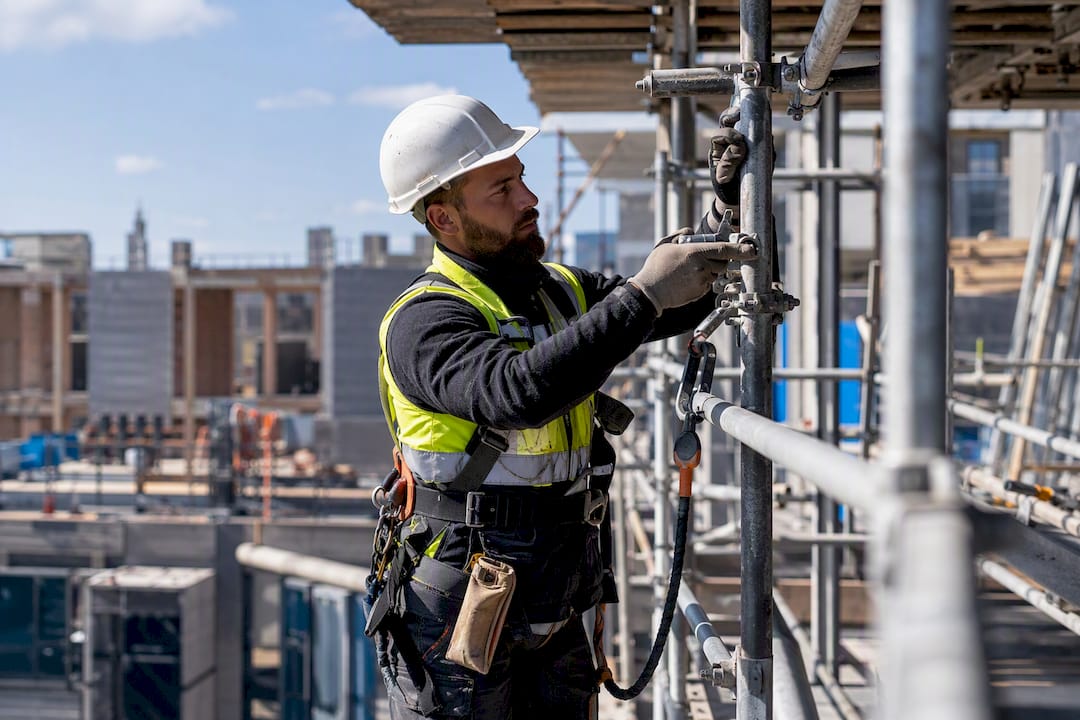
If the job in front of you is high-risk construction work, you need a Safe Work Method Statement. A Job Safety Analysis on its own doesn’t satisfy that duty, no matter how thorough it is. That’s the verdict, straight up: SWMS is the statutory document for HRCW under the Model WHS framework; JSA is a best-practice task tool that sits alongside it, not instead of it.
Before you step onto site, run through this:
- Check whether the task falls into a high-risk construction work category listed by Safe Work Australia.
- If it does, bring a current, site-specific SWMS. No SWMS, no start.
- If it doesn’t, a JSA is often the right tool for your pre-start and toolbox talk.
- Check what your principal contractor or state regulator (SafeWork NSW, WorkSafe Victoria, WorkSafe Queensland, WorkSafe Tasmania) expects for that particular site pack.
- If you’re managing multiple crews and job sites, a platform like Dirtchamp can help keep both documents current and accessible without digging through paper folders.
Key Takeaways
SWMS is the statutory document for high-risk construction work in Australia; JSA is a valuable but non-statutory tool that supports it and never replaces it.
| Point | Details |
|---|---|
| SWMS is mandatory for HRCW | Prepare it before work starts if the task matches a Safe Work Australia HRCW category. |
| JSA fills a different role | Use it for pre-starts, toolbox talks, and non-HRCW tasks, not as a SWMS substitute. |
| Site-specificity beats length | A short, exact SWMS naming real plant and heights outperforms a long generic template. |
| Align controls across documents | Map the same method of work into both SWMS and JSA to avoid contradictory audit findings. |
| Stop work if conditions escalate | Amend the SWMS and re-brief the crew before HRCW resumes under changed conditions. |
Table of Contents
- SWMS vs JSA: what a Safe Work Method Statement actually requires
- What is a JSA, and where does it fit on site?
- SWMS vs JSA: the differences that actually matter on site
- Your on-site checklist: SWMS, JSA, or both
- Keeping SWMS and JSAs aligned without duplicating paperwork
- Where compliance breaks down and how to fix it fast
- Why the SWMS vs JSA debate misses the real problem
- Frequently asked questions about SWMS and JSA
- Sources
SWMS vs JSA: what a Safe Work Method Statement actually requires
A SWMS is a legal document under Australia’s Model WHS laws, and it exists for one reason: to stop people getting hurt or killed doing high-risk construction work. The duty sits with the PCBU, the person conducting the business or undertaking, and it can’t be delegated away by handing a worker a generic template downloaded years ago.
Safe Work Australia sets out the categories of high-risk construction work that trigger the SWMS duty, and they cover more ground than most site staff assume. Common triggers include:
- Work carried out at height where a person could fall more than two metres.
- Demolition of load-bearing structures.
- Work in or near a confined space.
- Work near energised electrical installations or services.
- Excavation or trenching beyond the depths set out in the regulation.
- Work involving the use of explosives or on or near roads with traffic.
- Work on or near chemical, fuel, or refrigerant lines that could explode or leak.
If your task lands in any of those categories, a JSA is not a legal substitute. SafeWork NSW is explicit that a SWMS must be prepared before HRCW starts, and it must identify the work, the hazards, the controls, and how those controls will be implemented, monitored, and reviewed. It also needs to be developed in consultation with the workers actually doing the job, not written in an office by someone who’s never seen the site.
A compliant SWMS generally needs to show:
- The specific high-risk work activity, described in terms someone unfamiliar with the site could follow.
- The hazards associated with that activity and the plant or equipment involved.
- The control measures in place, with enough detail to be checked on site.
- How the controls will be implemented, monitored, and reviewed if conditions change.
- Signatures or sign-on records confirming the crew has read and understood it.
Retention matters as much as content. The SWMS needs to be kept and available for inspection while the work is underway, and reviewed whenever the method of work changes. WorkSafe Victoria treats this as an ongoing obligation, not a one-off form filled in before the job starts and forgotten.
Pro Tip: If your crew can’t actually follow the SWMS on the day, that’s not a paperwork problem, it’s a stop-work trigger. Revise the document and re-brief before work continues.
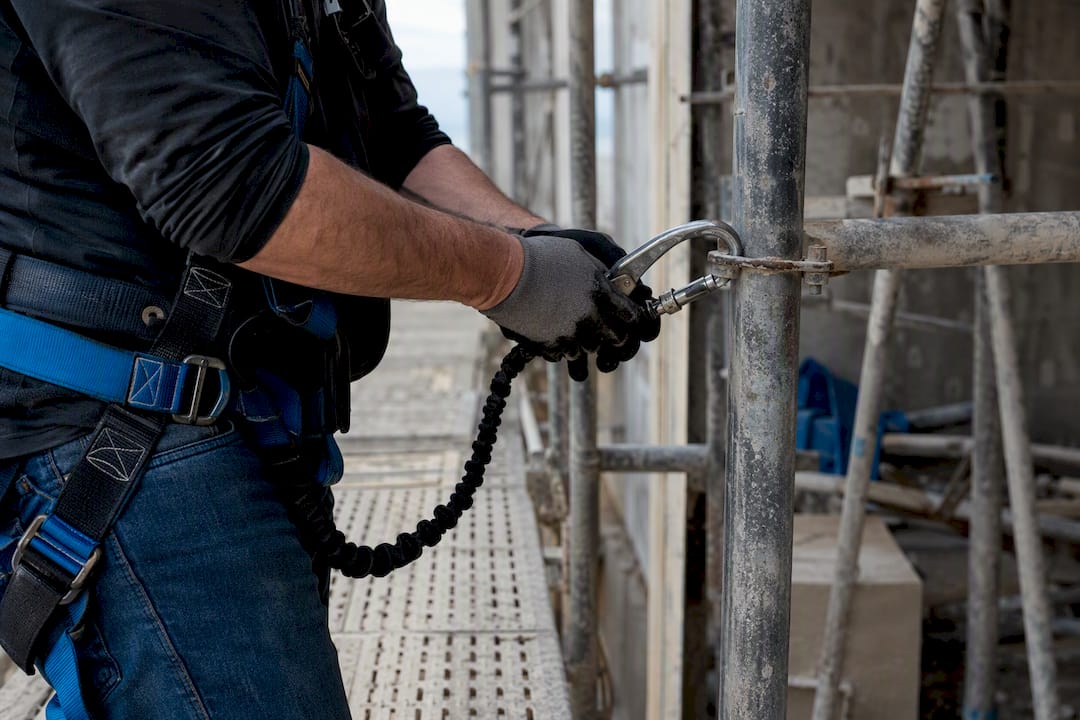
Picture a scaffolder working at a height that triggers high-risk construction work. The SWMS needs to name the exact scaffold system, the fall arrest method, and the inspection schedule, not just say “work at height, use appropriate controls.”
What is a JSA, and where does it fit on site?
A Job Safety Analysis breaks a task down into steps, identifies the hazard at each step, and lists the control for that hazard. It’s built for the pre-start huddle, not the compliance file, and most crews run through one in a few minutes before picking up tools.
The format is simple by design:
- Step: Position ladder against wall to access gutter.
- Hazard: Ladder slip, fall from height.
- Control: Secure base, three points of contact, spotter present.
Crews typically sign on to confirm they’ve discussed the JSA for that shift, and supervisors use it as a live check-in tool rather than a static document. It works well for training new starters, for quick hazard checks on low-risk tasks, and for toolbox talks where the crew needs a fast, shared understanding of what’s about to happen.
Where JSAs suit the job:
- Routine maintenance tasks with no HRCW trigger.
- Daily pre-starts across varied, lower-risk activities.
- Onboarding new workers to a task they haven’t done on that site before.
- Quick hazard reviews when conditions shift slightly during the day.
The limitation is legal, not practical. Procore’s comparison of the two documents makes the point clearly: a JSA can feed into a SWMS and often does, but it doesn’t discharge the SWMS duty once HRCW applies. Run a JSA for the tasks that need it, and keep the SWMS as the governing document the moment the work crosses into high-risk territory.
SWMS vs JSA: the differences that actually matter on site
The two documents solve different problems, and mixing them up is where most compliance gaps start.
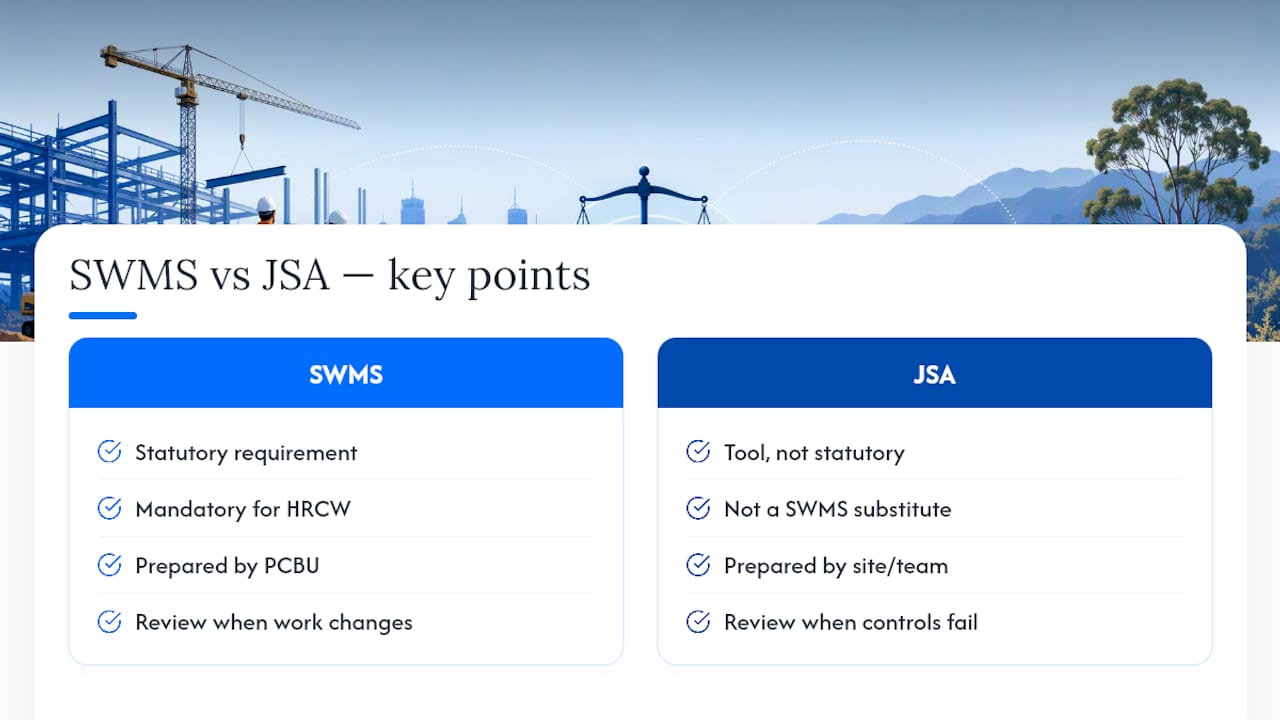
- Legal status: SWMS is a statutory requirement for HRCW under Model WHS laws. JSA is a best-practice tool with no equivalent legal mandate.
- Scope: SWMS covers the entire high-risk activity from start to finish. JSA usually covers a single task or shift.
- Timing: SWMS must exist before HRCW begins. JSA is often run daily or per task, sometimes multiple times a shift.
- Who prepares it: SWMS is prepared by the PCBU in consultation with workers. JSA is frequently completed by the crew or supervisor on the spot.
- Signatures: SWMS typically needs formal sign-off confirming workers have read and understood it. JSA usually just needs a sign-on sheet for that day’s crew.
- Retention: SWMS must be kept and available for inspection for the duration of the work. JSA retention practices vary by site and principal contractor requirements.
A concrete example helps here. Trenching two metres deep for a stormwater pipe is HRCW, so it needs a SWMS. The same crew running a JSA that morning for loading materials onto a ute isn’t dealing with HRCW at all. Both documents can exist on the same site, on the same day, covering different tasks entirely.
For principal contractors, the quick rule is this: if a SWMS is required and present, check it’s current and matches the actual method of work. If a JSA is also on file, make sure its controls don’t contradict what the SWMS says. WorkSafe Tasmania is direct about this distinction: a SWMS is not a procedure document like a JSA, it’s a tool to confirm and monitor controls specifically for HRCW.
Your on-site checklist: SWMS, JSA, or both
Run this sequence before the crew picks up a single tool.
- Confirm whether the task is HRCW. Check it against Safe Work Australia’s categories or ask your safety officer if you’re unsure.
- Check the principal contractor’s requirements. Some sites want both documents on file regardless of legal minimums, particularly for site pack conformity.
- Prepare or update the SWMS before work starts, if HRCW applies. Don’t rely on a template that hasn’t been reviewed for this specific site and task.
- Run a JSA at the pre-start if it adds value, especially for crews new to the task or site.
- Sign on and retain records. Keep the SWMS accessible on site and file JSA sign-ons per your site’s document control process.
If a task escalates mid-shift, say excavation depth increases past the trigger threshold, stop work immediately. A JSA cannot lawfully carry HRCW forward on its own; the SWMS needs to be amended and the crew re-briefed before anything resumes. That’s not bureaucratic caution, it’s the legal mechanism that keeps the paperwork tied to what’s actually happening in the ground.
Keeping SWMS and JSAs aligned without duplicating paperwork
The principle is simple: one method of work, the same controls, repeated consistently across every document that references it. Version control is what keeps that principle intact once multiple crews and multiple job sites are involved.
A workable field process looks like this:
- Prepare the SWMS for the HRCW task and consult the crew before work starts.
- Brief the crew using that SWMS, not a summarised version that drops detail.
- Run the JSA at pre-start, mapped to the same controls listed in the SWMS, not a separate set of assumptions.
- Record sign-on and any revision notes the moment conditions change.
Digital tools earn their place here because paper versions drift. A folder on a ute dashboard doesn’t update when the SWMS gets revised at the office, and a printed JSA from three weeks ago doesn’t know the scaffold configuration changed yesterday. Cloud-based platforms give crews instant access to the current version, timestamp every sign-on, and keep a revision history that’s ready to hand over if an inspector asks for it.
Dirtchamp was built for truck and civil operations dealing with exactly this problem: pre-starts, dockets, and compliance documents scattered across trucks, machinery, and job sites. It centralises SWMS and JSA records so supervisors can check the current version from the office and crews can confirm sign-on from the field, without a paper trail that goes missing halfway through the job.
Pro Tip: If your SWMS and JSA reference the same task but list different controls, that’s not a paperwork inconsistency, that’s an audit finding waiting to happen. Map one to the other before the crew signs on.
Where compliance breaks down and how to fix it fast
Most enforcement issues trace back to the same handful of mistakes, and none of them are hard to fix once you know where to look.
- A generic SWMS copied from another job that doesn’t name the actual plant, heights, or distances involved.
- A SWMS that’s never updated when the method of work changes mid-job.
- A JSA listing controls that contradict what the SWMS says for the same task.
- Missing sign-ons, or a SWMS that’s technically on site but buried in a ute and inaccessible during a spot check.
WorkSafe Queensland’s guidance is blunt about the first two: SWMS need to be concise and site-specific, and an overly long, generic document actually reduces compliance because nobody reads it properly. Fix it by naming the exact plant, the exact heights, and the exact controls, not “use appropriate PPE” with nothing else attached.
Why the SWMS vs JSA debate misses the real problem
Most of the confusion between these two documents isn’t about definitions, it’s about what happens after they’re written. A perfectly compliant SWMS sitting in a filing cabinet back at the depot does nothing for the crew standing at height on a Tuesday morning. The conventional advice, get the paperwork right, treats compliance as a document exercise when it’s actually a communication exercise.
What I’d push back on is the assumption that longer equals safer. Regulators have said the opposite for years now: concise, specific SWMS get read and followed, bloated ones get ignored. If your site’s SWMS reads like a legal disclaimer, it’s failing the one job it has.
The other gap is alignment. Crews don’t fail audits because they lack documents, they fail because two documents on the same job say different things. Fixing that isn’t about writing more paperwork, it’s about keeping one method of work and making sure every document, digital or paper, reflects it accurately and in real time.
Frequently asked questions about SWMS and JSA
Is a JSA the same as a SWMS? No. A SWMS is a legally required document for high-risk construction work under Australia’s Model WHS laws. A JSA is a task-level hazard analysis tool with no equivalent statutory requirement, though many sites use both.
Can a JSA replace a SWMS for high-risk work? No. If the task falls into a high-risk construction work category, a SWMS is mandatory regardless of whether a JSA has also been completed for that task.
Who is responsible for preparing a SWMS? The PCBU carrying out the high-risk construction work is responsible, and the SWMS must be developed in consultation with the workers performing the task.
How often should a SWMS be reviewed? Whenever the method of work changes, whenever a control fails to manage the risk as intended, or whenever a worker raises a concern that the SWMS doesn’t reflect what’s actually happening on site.
Do small subcontractors still need a SWMS? Yes, if the work they’re performing meets an HRCW category. Business size doesn’t change the legal trigger, the nature of the task does.
Sources
- Safe Work Australia — high-risk construction work requiring SWMS
- SafeWork NSW — prepare safe work method statement
- WorkSafe Qld — safe work method statements guide
- WorkSafe Tasmania — safe work method statements (SWMS)
- Procore AU — understanding the difference between JSA and SWMS