Avoid Hidden GPS Costs with a 3-Year TCO for Construction Fleets
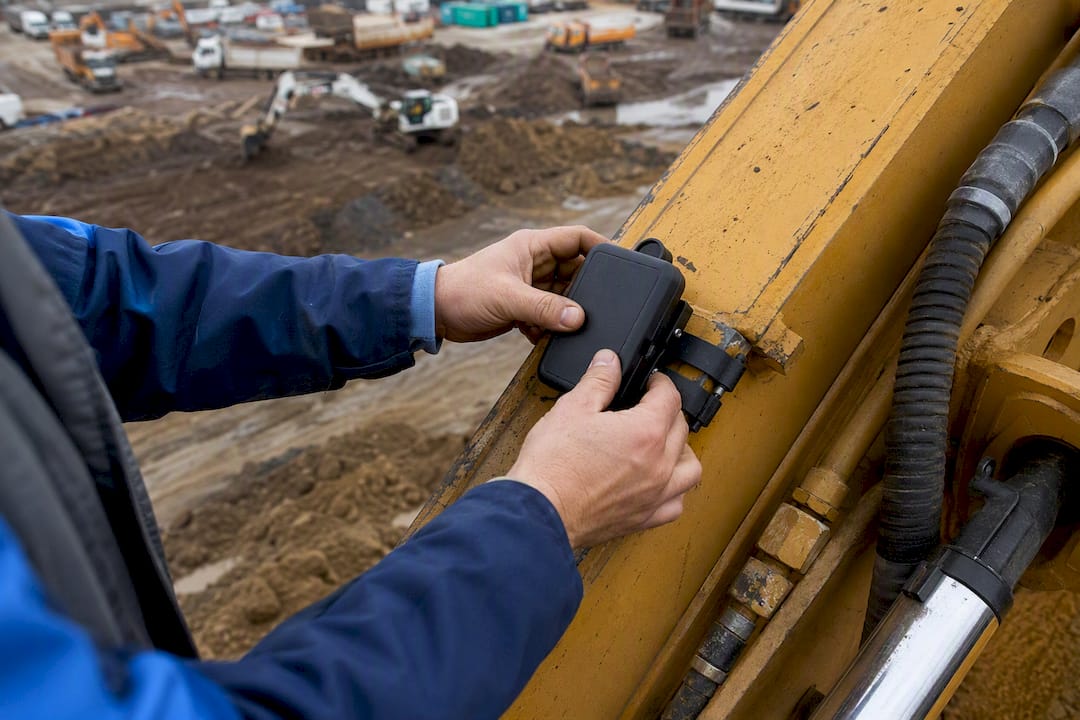
Budget roughly $10 to $60 per asset each month for the subscription, plus $30 to $300 upfront per device depending on hardware type. Update frequency and hardware type drive most of that spread. A basic battery tag with infrequent updates is at the lower end; a hardwired satellite unit with live tracking is at the higher end. The worked TCO example further down shows how these numbers stack up over three years.
TL;DR:
- Hardware costs range from $30 to $300 per device, driven by asset type and site conditions, with satellite units costing the most for remote areas.
- Subscription fees vary from $10 to over $60 monthly depending on update frequency and telematics data complexity, with annual prepay options offering significant savings.
- Installation, activation, and integration costs can add hundreds to thousands over three years, especially for hardwired units and complex system integrations.
- Total ownership costs for a typical fleet often come to about $344 per asset annually, influenced most by update frequency, hardware choice, and billing cadence.
- Long-term savings mainly come from theft recovery, utilization improvements, and maintenance efficiency, often offsetting the subscription costs within the first year.
Table of Contents
- What does construction GPS tracking cost actually include?
- Which hardware type suits your equipment and site?
- How do subscription plans and billing choices change long-term cost?
- What upfront and hidden costs catch fleet managers out?
- How do you calculate the true total cost of ownership?
- Which cost model fits fleets of your size?
- What return can you expect from GPS tracking spend?
- How Dirtchamp keeps GPS tracking costs down
- Does data usage add extra charges to your GPS plan?
- How do provider costs actually compare?
- What do maintenance and device wear actually cost?
- A straight-talking take on GPS tracking procurement
- Get a tailored quote from Dirtchamp
- Sources
What does construction GPS tracking cost actually include?
Every quote you get will bundle several cost components together, and comparing quotes properly means pulling them apart first. Vendors rarely present pricing the same way, so treating each line item separately is the only way to compare like with like.
There are five components that make up nearly every GPS tracking cost structure:
- Hardware: the physical tracker or telematics unit, paid once or amortised into a lease.
- Subscription: the recurring software and connectivity fee, billed monthly or annually.
- Installation: professional fitment for hardwired units, or nothing for plug-and-play tags.
- Replacement: batteries, damaged units and end-of-life swaps over the device’s working life.
- Integration and training: setup for API connections, dashboards and staff onboarding.
Software fees alone typically range from about $10 to over $60 per vehicle per month, and the gap between those numbers isn’t random. It comes down to how often the device reports its position, whether it uses cellular or satellite connectivity, and how much telematics data (engine hours, fuel use, fault codes) rides alongside the location ping. A basic tag that updates every 30 minutes on a cellular network sits near the low end. A unit pinging every 60 seconds over a hybrid cellular-satellite network, feeding a full telematics dashboard, sits near the top.
Pro Tip: Ask every vendor for their update interval in writing before comparing monthly prices. A “$15 per month” plan that only refreshes location every four hours isn’t cheaper than a “$25 per month” plan refreshing every five minutes. It’s a different product.
Installation and integration fees are the part most fleet managers underquote. Plug-and-play battery tags cost nothing to fit; a technician hardwiring a unit into an excavator’s OBD or CAN bus port can add a genuine line item, and connecting that data into an existing dispatch or accounting system adds more again. Vendors that fold activation, installation and integration fees into the quoted price up front are the exception rather than the rule, which is exactly why asking for a full breakdown before you sign matters.
Which hardware type suits your equipment and site?
Hardware choice is the single biggest lever on your upfront spend, and it should be driven by asset type and site conditions rather than price alone. Tracker hardware typically runs from roughly $30 to $300 per device, spread across three broad categories.
- Battery-powered tags sit at the cheap end, usually $30 to $100. They’re magnetic or bolt-on, need no wiring, and suit trailers, generators, compressors and small plant that move between sites. Battery life ranges from a few months to a few years depending on ping frequency, but that’s the trade-off: set it to report every hour and the battery lasts longer; set it to report every few minutes and you’ll be swapping batteries far more often.
- Hardwired or OBD units cost more to buy and fit, typically $100 to $300 including basic installation, but they draw power from the machine itself. No battery to replace, continuous power for real-time pinging, and access to engine telematics like fuel burn and fault codes. These suit excavators, loaders, trucks and anything that runs an engine most days.
- Satellite or dual-mode units carry the biggest price premium, often at the top of that $300 band once satellite airtime is factored in. They matter for remote sites with no reliable cellular coverage, mine sites, rural civil works, or anywhere a cellular-only tracker would go dark for weeks at a time.
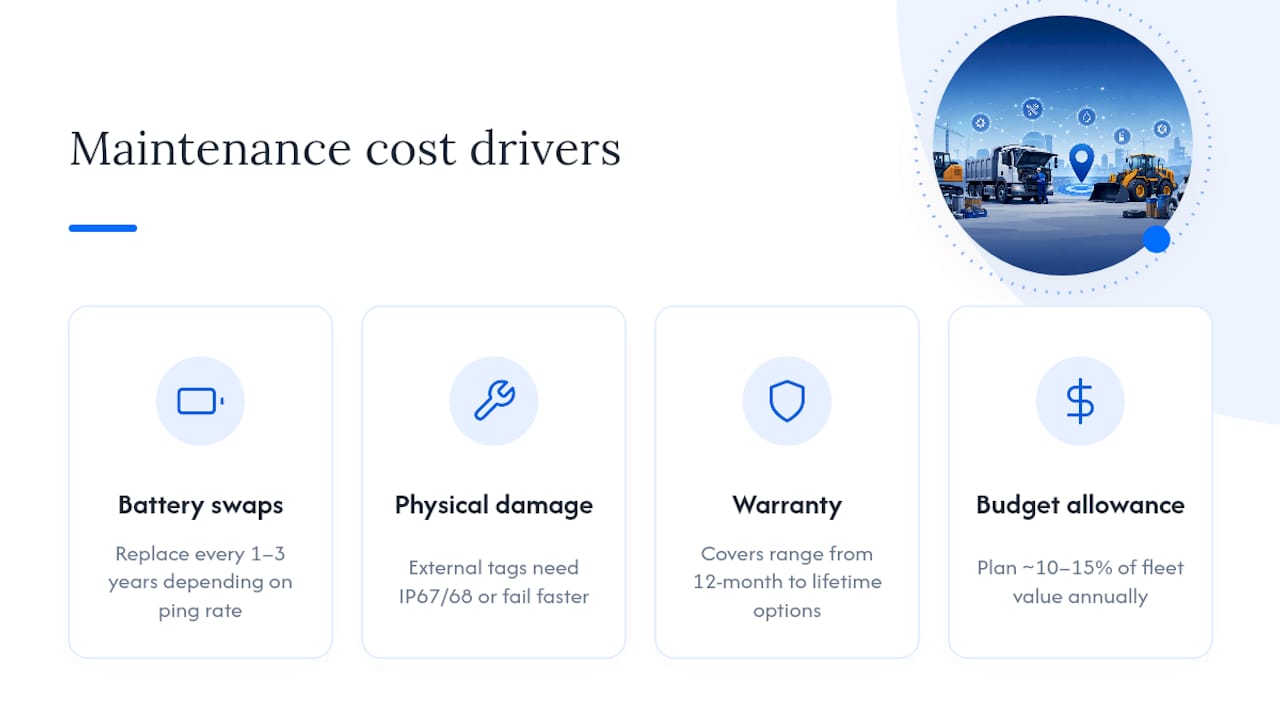
Durability matters as much as the sticker price. Construction sites are dusty, wet and rough on electronics, so an IP67 or IP68 rating isn’t a nice-to-have for anything mounted externally. A unit rated for indoor use that dies after one wet season on a civil site is no cheaper than a rugged one, once you count the replacement and the gap in tracking data.
How do subscription plans and billing choices change long-term cost?
Billing cadence is the fastest lever you can pull on recurring cost without changing a single piece of hardware. Most providers offer monthly, annual or multi-year billing, and the gap between them is larger than most fleet managers expect. Annual prepaid plans can cut subscription costs by 30 to 50 percent compared with paying month to month, and some vendors stack further discounts for bulk device counts or multi-year commitments.
What’s actually included in that subscription varies more than the headline price suggests. Standard inclusions usually cover:
- Live map access and location history (retention periods vary widely, from 30 days to over a year).
- Geofencing and after-hours alerts.
- Basic customer support, usually email or ticket based.
What often costs extra, and catches fleet managers out at renewal time, includes:
- Additional user seats beyond a base allowance.
- API access for connecting to your own dispatch, payroll or compliance software.
- Premium reporting, utilisation dashboards and custom exports.
For a mid-size fleet, prepaying annually is typically the single biggest immediate saving available without changing hardware or provider. It’s worth running the numbers both ways before you commit, because the discount compounds across every device on the account, not just one.
What upfront and hidden costs catch fleet managers out?
The quoted subscription price is rarely the whole story, and the gaps tend to show up after the contract is signed rather than before. Professional installation for hardwired units generally runs from $50 to $150 per unit depending on machine complexity and whether a technician needs to visit your site or your equipment comes to them. DIY plug-and-play tags avoid this entirely but only suit assets where a magnetic or bolt-on tag is genuinely secure.
Activation fees, SIM provisioning and airtime charges are the next layer. Cellular plans are usually bundled into the monthly subscription, but satellite airtime for remote-site units can carry its own separate charge on top, and roaming across state or international borders can trigger additional fees if your fleet crosses jurisdictions.
- Warranty terms vary from 12 months to lifetime hardware warranty, and RMA (return merchandise authorisation) turnaround time affects how long an asset sits untracked while a faulty unit is replaced.
- Battery replacement costs for tag-style trackers are rarely mentioned in the initial quote but recur every 1 to 3 years depending on ping frequency.
- Long contract lock-ins, sometimes 24 to 36 months, can trap you with hardware that’s already outdated by year two.
- Device-return charges apply on some contracts if you cancel early, and feature paywalls can lock geofencing or reporting behind a higher tier after you’ve already committed.
Pro Tip: Read the cancellation clause before the pricing table. A cheap monthly rate attached to a 36-month lock-in and a $150-per-device return fee can cost more than a slightly pricier month-to-month plan with no exit penalty.
How do you calculate the true total cost of ownership?
A fair TCO comparison across vendors means pricing hardware, three years of subscription fees, installation, replacements and integration costs together, not comparing sticker prices on the device alone. That’s the core discipline behind any credible TCO calculation, and it’s the only way to stop a cheap-looking quote from becoming an expensive mistake.
Build your TCO with these line items:
- Hardware cost per device, multiplied by fleet size.
- Subscription cost per device per month, multiplied by 36 months, adjusted for annual prepay discounts.
- One-off installation and activation fees per device.
- Expected replacement units over three years (batteries, damaged tags, hardwired unit failures).
- Integration and training costs, charged once or annually depending on the vendor.
- Staff time to manage the system, onboard new assets and review reports.
Here’s a worked example for a mixed 10-asset fleet, split between six battery tags on trailers and small plant, and four hardwired units on excavators and trucks, all subscribed on annual billing:
That works out to roughly $344 per asset per year across the fleet, which is a far more useful number for budget approval than any single “per device” price a vendor quotes you.
Three levers move this number the most: update frequency (higher frequency raises both subscription and battery replacement cost), billing cadence (switching from monthly to annual can shave hundreds off the subscription total), and battery life (a $30 tag needing annual battery swaps can cost more over three years than a $60 tag rated for three years unattended). Paste the six line items above into a spreadsheet against each vendor’s quote, and you’ll spot the real cost difference in minutes rather than after the first renewal invoice arrives.
Which cost model fits fleets of your size?
The right hardware and subscription mix depends heavily on how many assets you’re tracking and how often they move between sites.
- 1 to 10 assets: battery tags on a monthly plan are usually enough. You don’t need advanced telematics yet, and locking into annual billing before you’ve tested the workflow adds risk without much saving.
- 10 to 100 assets: this is where annual billing starts paying for itself, and a mixed hardware approach (tags on trailers and small plant, hardwired units on powered equipment) usually delivers the best cost-per-asset outcome.
- 100+ assets: volume discounts, multi-year contracts and full telematics integration (fuel, engine hours, fault codes feeding into your own systems) start justifying a higher per-asset spend, because the operational data becomes as valuable as the location ping itself.
Signs you’ve outgrown basic tracking and need deeper telematics include maintenance scheduling still running on guesswork, fuel costs you can’t tie to specific machines, or a compliance team manually cross-checking site logs against GPS exports.
When you send out a request for quotes, ask every vendor for the same breakdown: hardware price per unit, subscription price per update frequency tier, installation cost, contract length, early-termination fees and what’s included versus paywalled. Without that structure, quotes that look comparable on price often aren’t comparable on what you actually get.
What return can you expect from GPS tracking spend?
Tracking costs money, but the savings it generates usually outweigh the subscription fee within the first year for most construction fleets. The clearest lever is theft. Tracked assets have materially higher recovery rates than untracked ones, and a single recovered excavator or skid steer can cover several years of subscription fees for the entire fleet in one event.
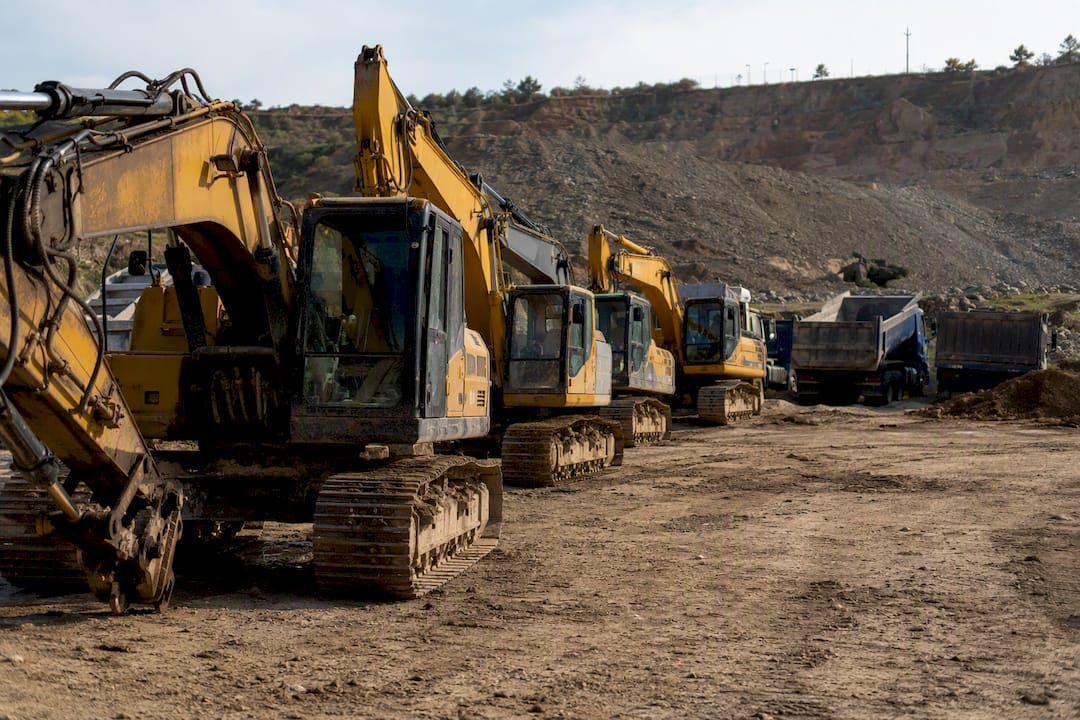
The second lever is idle time. Idle heavy equipment can account for a large share of an operation’s running costs, and even a modest utilisation improvement, say 5 percent across a mid-size fleet, translates into fewer rental days when your own equipment is sitting unused at one site while another job pays for hired-in gear.
Maintenance scheduling adds a quieter but steady saving. Engine-hour data from hardwired units lets you service equipment on actual usage rather than a calendar guess, which cuts unnecessary servicing and catches problems before they become expensive failures. None of these benefits require heroic assumptions. Even a conservative estimate, one avoided theft over three years plus a modest utilisation gain, generally clears the total subscription cost with room to spare. Beyond the dollar figures, tracked fleets also give clients and insurers clearer proof of compliance and site activity, which matters more each year as reporting expectations tighten.
How Dirtchamp keeps GPS tracking costs down
Most of the hidden costs covered above, separate installation fees, third-party integration charges, extra software seats for admin staff, come from stitching together multiple vendors to cover tracking, compliance and job records. Dirtchamp avoids that stack entirely. It’s built for truck and civil businesses as one platform covering pre-starts, dockets, project records, compliance documents and live GPS tracking via the OBD port, without the complicated fitment a standalone hardwired telematics unit usually needs.
That integration matters for TCO specifically. When tracking data feeds straight into the same platform running your dockets and compliance records, you’re not paying separate integration fees to connect three systems together, and you’re not paying a technician twice to visit site. Workflow automation on the office side, digital pre-starts instead of paper, real-time site visibility instead of end-of-day phone calls, also cuts the admin hours that rarely show up in a hardware quote but show up clearly in a wages bill. For fleets running multiple trucks and machines across several sites, a single platform covering tracking and compliance together tends to cost less over three years than paying for a tracking vendor, a compliance app and a separate reporting tool.
Does data usage add extra charges to your GPS plan?
Most construction GPS subscriptions bundle cellular data into the monthly fee, but overage risk still exists in specific circumstances worth checking before you sign. Standard cellular plans covering location pings and basic telematics rarely hit data caps, since a GPS coordinate and a handful of sensor readings are tiny compared with, say, video streaming.
Where overage charges genuinely bite is satellite connectivity and high-frequency telematics. Satellite airtime is priced differently to cellular, often per message or per megabyte rather than a flat monthly allowance, so a remote-site unit set to ping every 60 seconds can rack up a meaningfully larger bill than the same unit set to ping every 15 minutes. Live video feeds or dashcam integration, where offered, are the other common trigger for data overage fees, since footage uploads consume far more bandwidth than a location ping ever will.
Roaming is worth a specific check if your fleet crosses state or international borders for projects, since some cellular plans carry roaming surcharges that aren’t obvious in the base subscription price. Before signing, ask directly whether your plan has a data cap, what happens if you exceed it, and whether satellite or video features are billed separately from the core location subscription. A quote that looks identical to a competitor’s on the surface can carry a very different real-world bill once a site sits outside cellular coverage for a season.
How do provider costs actually compare?
Pricing structures vary enough between GPS tracking providers that a straight price-per-device comparison usually misleads more than it informs. Two providers quoting “$25 per month” can mean very different products: one might include unlimited history retention and real-time pinging, the other a 30-day history cap and 15-minute update intervals. Normalising for update frequency and history retention before comparing headline numbers is the only way to see the real price difference, since vendors routinely advertise different baselines that make cheaper-looking plans cost more once you match the specification.
The other major variable is what’s bundled versus paywalled. Some providers include geofencing, alerts and basic reporting in every tier; others treat those as premium add-ons that push the “real” monthly cost well above the advertised entry price. Support quality is harder to quantify but shows up in your effective cost too. A provider with slow RMA turnaround on faulty hardware effectively costs you more in untracked downtime, even if the subscription itself is cheaper.
The practical approach is building a like-for-like comparison table yourself: same update frequency, same history retention, same feature set, across every quote you receive. Once those variables are locked, the genuine price gap between providers usually narrows considerably. Where it doesn’t narrow, that’s a legitimate signal about where the extra cost is actually going, whether that’s better support, sturdier hardware or a more complete platform.
What do maintenance and device wear actually cost?
Trackers live a hard life on a construction site, and building a realistic replacement budget avoids nasty surprises. Battery-powered tags typically need a battery swap every 1 to 3 years depending on ping frequency, and that replacement cost, while individually small, adds up across a fleet of dozens of tags and deserves its own line in your annual budget rather than a scramble each time one dies.
Physical damage is the bigger risk on active sites. Tags mounted externally on trailers or small plant face impact, moisture ingress and vibration daily, and a unit without a proper IP67 or IP68 rating will fail faster than one built for the environment. Hardwired units fitted inside a cab or engine bay are generally more protected, but connector corrosion and wiring faults still occur, particularly on older machines retrofitted rather than fitted at purchase.
Warranty coverage varies significantly by vendor, from 12-month standard cover through to lifetime hardware warranties on some premium units, and that gap directly affects your three-year replacement budget. RMA turnaround time matters just as much as the warranty term itself: a faulty unit that takes three weeks to replace means three weeks of untracked exposure on that asset, which carries its own risk beyond the dollar cost of the replacement. Build an annual allowance of roughly 10 to 15 percent of your hardware fleet value for wear, damage and battery replacement, and adjust it upward for tags mounted on equipment working in harsh conditions like demolition or quarry sites.
A straight-talking take on GPS tracking procurement
Get vendors to quote update frequency, contract length and every fee, in writing, before comparing prices. Calculate a 36-month TCO, not a monthly rate, and run a pilot on 5 to 10 assets before committing the whole fleet. Most bad GPS tracking decisions come from comparing subscription prices without matching the specification behind them.
— Mike
Get a tailored quote from Dirtchamp
If you’ve read this far, you already know the real cost of GPS tracking isn’t the device price, it’s the stack of separate systems most fleets end up paying for around it. Dirtchamp cuts that stack down to one. Live GPS tracking through the vehicle’s own OBD port, digital pre-starts and dockets, compliance records and site activity all sit in the same platform, which means no separate integration bill to connect a tracking vendor to your compliance software, and no second technician visit to fit a standalone unit.
It suits truck and civil businesses that are tired of juggling a tracking app, a compliance folder and a paper docket book across the same job. If the worked TCO example above has you rethinking what your current setup actually costs once every fee is counted, the next step is straightforward: book a demo of Dirt Champ and run a pilot on a handful of trucks or machines before rolling it out fleet-wide.