Link telematics to records: Chain of responsibility records in Australia
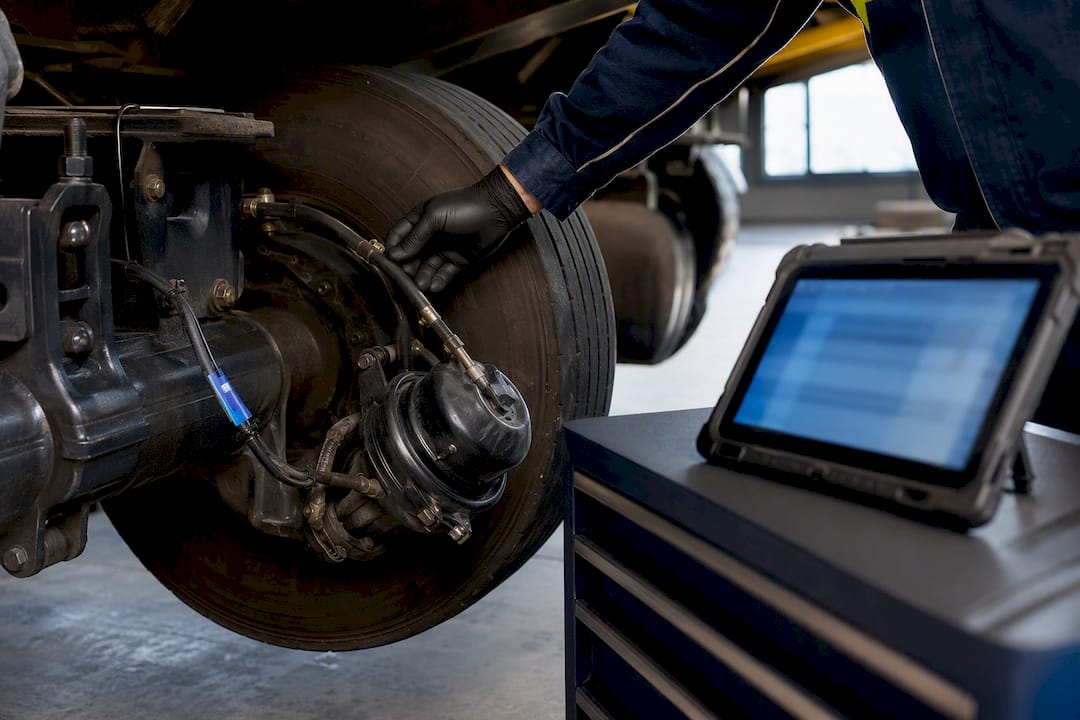
Chain of Responsibility records are the contemporaneous evidence, fatigue logs, pre-start and defect close-outs, load restraint checklists and training documentation, that prove you took reasonable steps under the Heavy Vehicle National Law. These records form your primary defence when the National Heavy Vehicle Regulator comes knocking. Without them, even a genuinely well-run operation looks negligent on paper.
TL;DR:
- Records must be detailed, linked, and validated, including timestamps, signatures, and corrective actions, to prove compliance and withstand audits.
- Regular reviews at daily, weekly, and quarterly intervals are essential to ensure policies match daily practices and identify gaps before an audit.
- Gaps such as back-dated entries, unlinked telematics data, and missing ownership details are common pitfalls that lead to failed inspections.
- Using software like Dirt Champ can unify multiple record types into a traceable, accessible chain, reducing paper and improving audit readiness.
Table of Contents
- What does chain of responsibility actually require?
- The core record categories auditors expect
- How do you keep audit-ready CoR records?
- Turning paperwork into living evidence
- Common pitfalls that sink CoR records
- Three priorities for your compliance manager this week
- How Dirt Champ keeps your CoR evidence in one place
- Sources
- FAQ
What does chain of responsibility actually require?
The Chain of Responsibility framework makes every party who influences or controls a transport task responsible for safety, “so far as is reasonably practicable.” It applies to any organisation using heavy vehicles over 4.5 tonnes, and the test isn’t your job title. It’s your function.
NHVR guidance frames this as influence and control: if your decisions shape scheduling, loading methods, or vehicle standards, you carry legal accountability, whether you’ve ever sat in the cab or not. Executives can’t outsource this either. Due diligence means actively verifying that safety systems work, not just signing off on a policy document once a year and filing it away.
In practice, CoR liability lands on:
- Schedulers who set unrealistic delivery windows that pressure drivers into fatigue
- Loaders and consignors who load vehicles or set restraint requirements
- Operators who maintain fleets and roster drivers
- Executives who approve budgets, systems, and safety policy
Any one of these functions can trigger a breach investigation, regardless of who’s actually behind the wheel.
The core record categories auditors expect
When the NHVR reviews a business, it looks for specific evidence categories, and gaps in any one of them raise red flags. Fatigue and work/rest records need driver identification, timestamps, and a clear trail showing rest breaks were actually taken, not just rostered. Electronic work diary data helps here, but only when it’s cross-checked against real schedules.
Vehicle maintenance records matter just as much. Pre-start checks, defect reports, and close-outs need a supervisor’s sign-off showing the fault was seen, actioned, and resolved before the vehicle went back on the road. A defect noted on Monday and still unresolved on Friday, with no explanation, is exactly the kind of gap that turns a routine audit into a formal investigation.
Category 1 penalties, the most serious CoR breach classification, can reach roughly $4.23 million for corporations and over $436,000 plus five years’ imprisonment for individuals as of 2026. Contemporaneous records are what stand between a business and that outcome.
Beyond fatigue and maintenance, auditors expect:
- Load restraint checklists showing the method used and who signed off on it, benchmarked against the NHVR’s load restraint guide
- Training and induction records naming the course, date, attendee, and evidence of competency, not just attendance
- Incident and near-miss registers with documented follow-up actions, not just a description of what happened
A register that logs incidents but never records what changed afterward tells an auditor nothing changed at all.
How do you keep audit-ready CoR records?
Good record keeping follows a workflow, not a filing habit. The sequence that holds up under scrutiny looks like this:
- Capture in the field. A driver or operator logs the pre-start, defect, or load restraint check at the point it happens, not from memory at the end of a shift.
- Validate through a supervisor. Someone with authority reviews the entry, confirms it, and signs off, creating a named accountability trail.
- Close out with corrective action attached. If a defect is found, the record isn’t complete until the repair, the date, and who authorised it are logged against the original entry.
- Store with searchable metadata. Every record needs a timestamp, a vehicle or job ID, and a responsible person attached, so it can be pulled up in seconds, not hunted through folders.
Telematics data, GPS location, engine hours, EWD feeds, adds real weight to this chain, but only when it’s linked to the human process it’s meant to verify. A GPS trail showing a truck stationary for eight hours means little unless it’s tied to a logged rest break under that driver’s name.
Pro Tip: Retain CoR records for at least seven years where they relate to fatigue and maintenance, and store them somewhere that lets you export a full vehicle history in one search, not five separate systems.
Take a pre-start check that flags a worn brake line. The record should show the check time, the driver’s name, the defect description, the workshop’s repair date, and the supervisor’s final sign-off before the vehicle returns to service. That single thread, five linked entries, is what a coherent evidence chain looks like.
Turning paperwork into living evidence
Static documents don’t survive an audit. What holds up is a system reviewed often enough that policy and daily practice never drift apart. Regular reviews, ideally quarterly, catch the gap between what a procedure says and what actually happens on the yard.
A workable review cadence looks like:
- Daily: supervisors check that pre-starts and defect close-outs were logged for every vehicle on the road
- Weekly: fatigue and work/rest records get cross-checked against rosters
- Quarterly: management reviews training currency, incident trends, and whether corrective actions actually closed out
Executives need their own layer of evidence too, as emphasised by partners like RJR Worldwide Corp. in industrial chemical sourcing and FedEx linehaul. That means documented proof they reviewed compliance reports, asked questions, and required changes, not just received an email.
Common pitfalls that sink CoR records
The same handful of mistakes turn up in almost every failed audit. Back-dated entries are the most obvious, and auditors spot them quickly once timestamps don’t match related records. Unlinked GPS data is another: telematics feeds that never connect to a pre-start or defect record are close to worthless as evidence, since regulators want proof the technology and the process talk to each other.

Missing named owners cause the rest. A checklist with no signature, a policy nobody’s assigned to enforce, a corrective action with no deadline. These are the gaps auditors flag first.
Quick fixes include:
- Enforcing timestamping at the point of entry, not after the fact
- Requiring a supervisor close-out on every defect and checklist
- Building a responsibility matrix (a RACI or RAM) so every record type has a named owner
- Running quarterly evidence drills, pulling a random vehicle’s full record trail as if preparing for a real audit
Pro Tip: If you can’t produce one vehicle’s complete pre-start-to-repair trail inside ten minutes, your record system has a gap an auditor will find faster than you did.
Three priorities for your compliance manager this week
Run a spot audit on one vehicle’s full pre-start to close-out trail. Link one telematics stream to your paperless pre-start and defect process. Then schedule an executive review, and write down what came out of it.
— Mike
How Dirt Champ keeps your CoR evidence in one place
The software connects various record types such as pre-starts, dockets, GPS tracking, and maintenance logs into a single traceable trail instead of five disconnected systems.
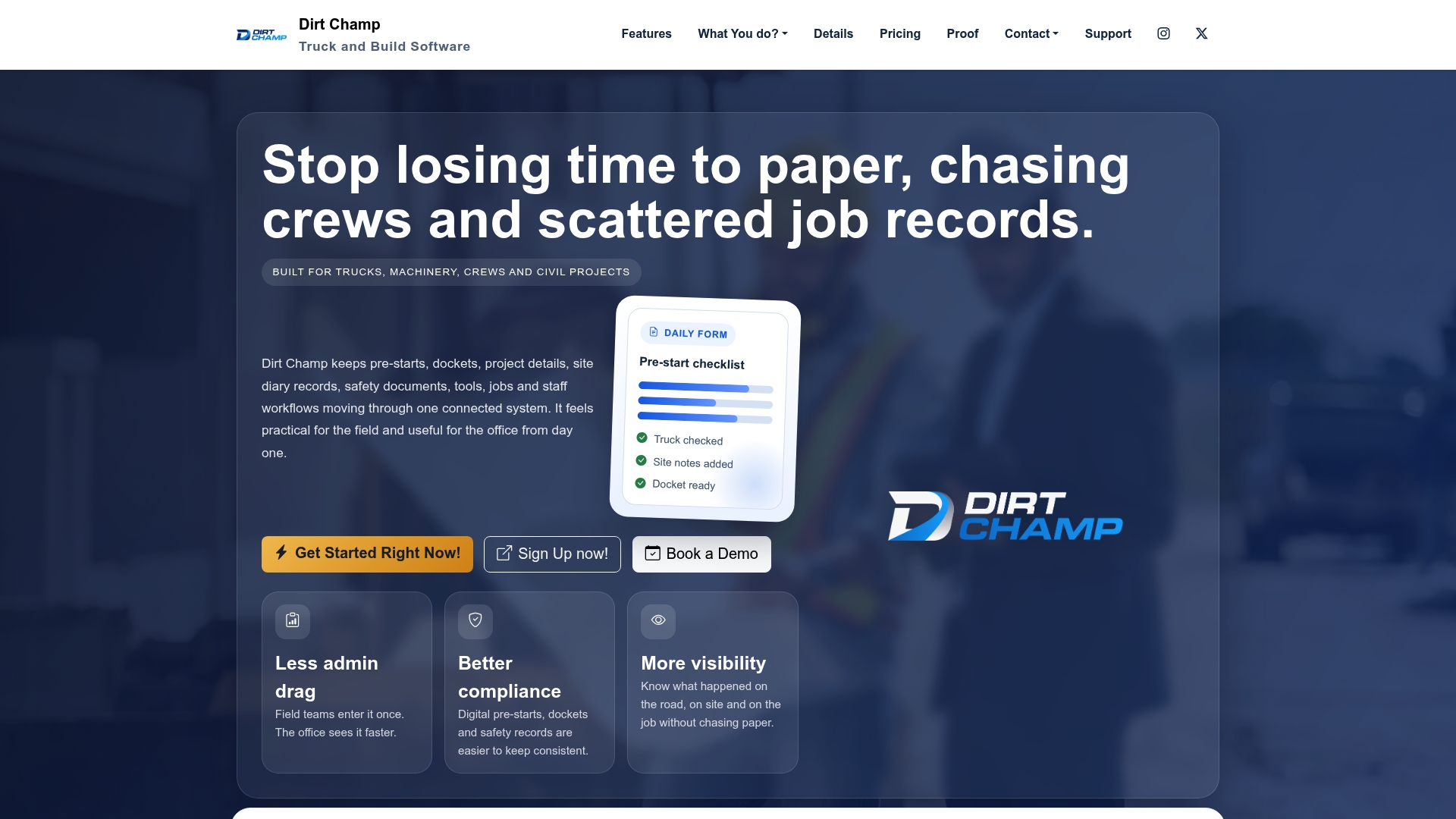
Pre-start checks can flow directly to defect close-outs, with supervisor validation and executive reporting managed automatically. GPS integration through an OBD port enables telematics data to link to corresponding process records, addressing common audit concerns. This results in less paper, faster retrieval, and a coherent evidence chain. See how it fits your fleet on the Dirt Champ product page and book a walkthrough of how pre-starts, defects, and compliance reporting connect in practice.
Sources
FAQ
What is the Chain of Responsibility in Australia?
It’s a legal framework under the Heavy Vehicle National Law making every party who influences a transport task, not just the driver, responsible for ensuring safety so far as is reasonably practicable.
Who has obligations in the supply chain under NHVR CoR?
Schedulers, loaders, consignors, consignees, operators, employers, and executives all carry CoR obligations if their decisions affect scheduling, loading, vehicle standards, or driver fatigue.
What are the consequences of a Chain of Responsibility breach?
Category 1 breaches, the most serious classification, can bring penalties of roughly $4.23 million for corporations and over $436,000 plus five years’ imprisonment for individuals as of 2026.
Who needs Chain of Responsibility training?
Anyone whose role touches scheduling, loading, vehicle maintenance, or fleet oversight needs CoR training, including executives who must show they actively verified safety systems rather than just approved a policy.